
Blake Rapid vs Glued Boots: Why Most Leather Boots Fail After One Year
Share
Blake Rapid vs Glued Boots: Why Most Leather Boots Fail After One Year
At first glance, most leather boots look solid. Clean stitching, polished leather, a reassuring weight. But after months of regular wear, many of them fail in exactly the same place — the sole.
This isn’t bad luck. It isn’t misuse. And it certainly isn’t because “leather boots don’t last anymore”. It’s almost always about how the boot is built.
In this article, we explain the real difference between glued boots and Blake Rapid construction, and why one is designed to be replaced — while the other is designed to be repaired and worn for years.
What Most Brands Don’t Tell You About Boot Construction
Most modern leather boots are assembled using industrial adhesives. The sole is glued directly to the upper, pressed, and sent down the production line.
This method is fast, cheap, and visually clean. It also creates a single critical failure point: once the glue weakens, the boot is effectively finished.
Where Glued Boots Fail First
- The flex point at the front of the sole
- The heel separation zone
- Edges where moisture penetrates
These failures typically appear within the first year of regular use. Not because the leather is poor — but because the construction was never meant to be serviced.
Why Blake Rapid Construction Is Different
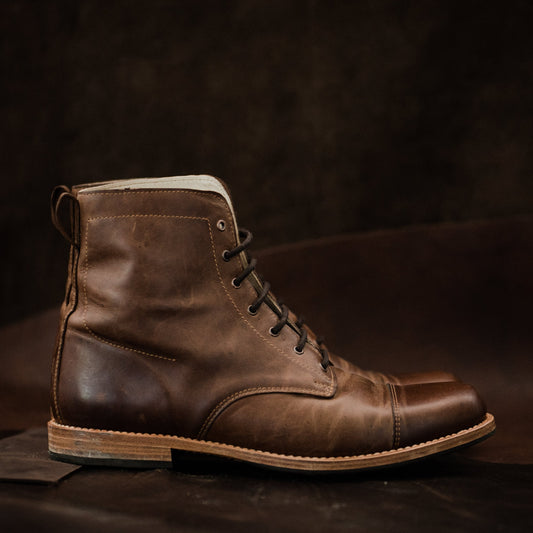
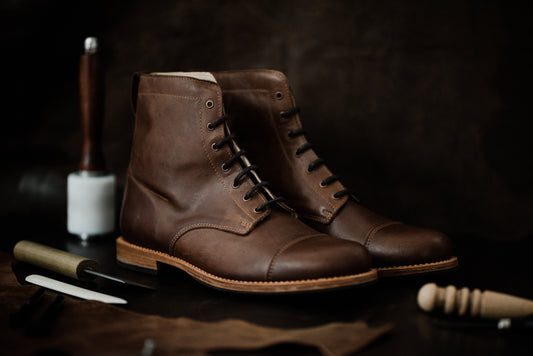
Blake Rapid construction connects the upper, midsole and outsole using stitched layers rather than glue alone. This allows the sole to be removed and replaced when worn.
Wear becomes a maintenance issue, not a structural failure. That distinction is what separates disposable footwear from long-term footwear.
Daily Wear Changes Everything
If you wear boots several times a week, glued construction becomes the weak point. Repeated flexing and moisture slowly break down the adhesive bond.
Blake Rapid construction is better suited to daily use because it keeps the structure intact even as the leather softens and adapts to your foot.
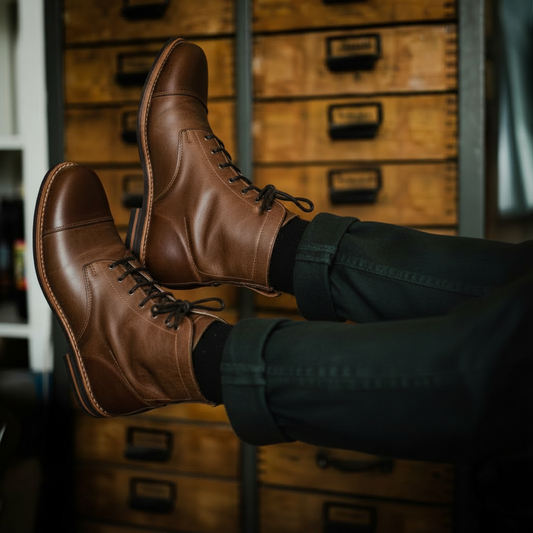
Blake Rapid boots built for regular wear:
All OldMulla boots use Blake Rapid construction to allow long-term use and resoling.
Style Doesn’t Have to Mean Disposable
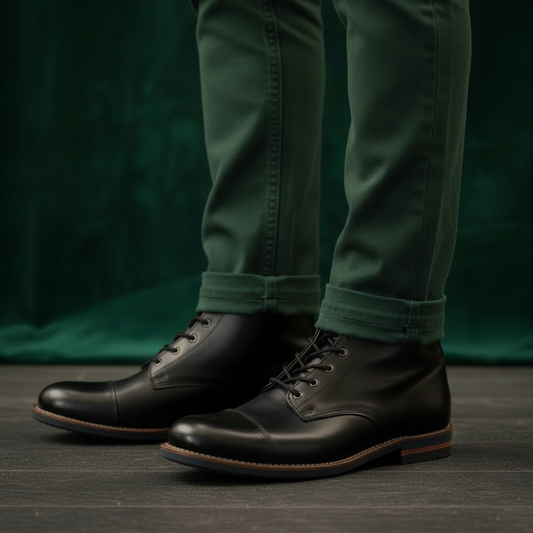
Many classic-looking boots rely on glued soles to achieve a cleaner silhouette. The trade-off is repairability.
Blake Rapid construction allows for a refined profile while keeping the boot serviceable. That means you don’t have to choose between style and longevity.
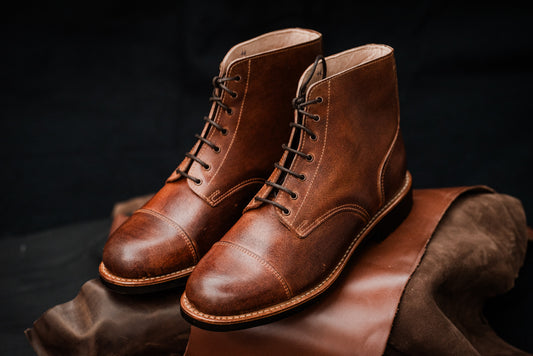
Classic leather boots designed to be repaired:
OldMulla combines traditional silhouettes with stitched construction for durability.
Travel, Movement and Mixed Environments
When boots are used across cities, travel, and varied conditions, the ability to repair them becomes essential.
A stitched construction turns wear into something manageable, rather than a reason to replace the entire boot.
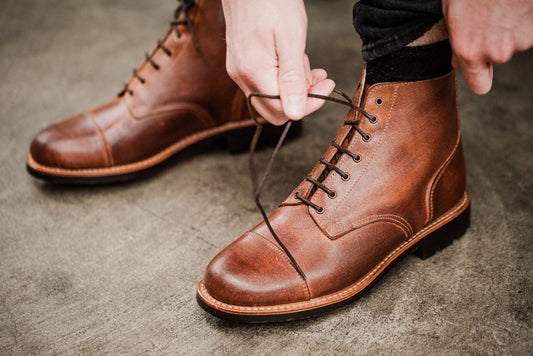
Boots made for movement and longevity:
OldMulla boots are designed to handle varied use without structural failure.
The Question That Actually Matters
The real question isn’t how a boot looks when it’s new. It’s whether it still makes sense after a year of wear.
Glued boots optimise for short-term cost. Blake Rapid boots optimise for time.
Once you understand that difference, the choice is no longer about fashion — it’s about intention.