
The Real Cost of Cheap Leather Boots (And Why They’re Never Cheap)
Share
The Real Cost of Cheap Leather Boots (And Why They’re Never Cheap)
Cheap leather boots are tempting. They look good, feel solid in the shop, and promise style at a fraction of the price.
But after a few months of regular wear, many buyers reach the same conclusion: they weren’t cheap at all.
The problem isn’t leather itself. It’s the way most low-cost boots are designed — not to last, but to be replaced.
The Price You See vs the Cost You Pay
Price is what you pay at checkout. Cost is what you pay over time.
Cheap boots optimise for a low entry price by cutting corners where it matters most: construction, materials, and repairability.
Once those compromises surface, the real cost becomes clear.
How Cheap Boots Really Save Money (For the Brand)
To hit low price points, most mass-produced boots rely on:
- Glued soles instead of stitched construction
- Corrected or split leather instead of full-grain
- Minimal labour time per pair
These choices reduce manufacturing cost and increase production speed. They also dramatically shorten the lifespan of the boot.
When the sole separates or the leather collapses, repair is often impossible — and replacement becomes the only option.
The Replacement Cycle No One Talks About
A common pattern looks like this:
- Year 1: boots look good, minor wear appears
- Months 12–18: sole or heel begins to fail
- Repair attempt: rejected or uneconomical
- New purchase required
Repeat this cycle two or three times, and the “cheap” option quietly becomes the expensive one.
Why Repairability Changes Everything
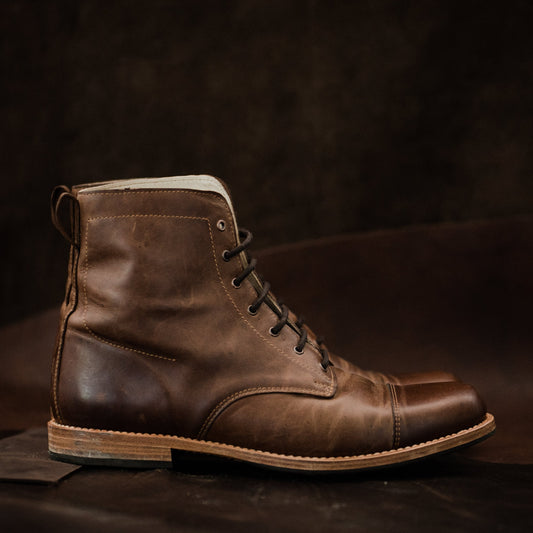
Boots built with stitched construction — such as Blake Rapid — approach wear differently.
Instead of failing structurally, they age. Soles wear down, heels need replacing, leather softens — but the boot remains intact.
Maintenance replaces replacement. And that single distinction changes the entire cost equation.
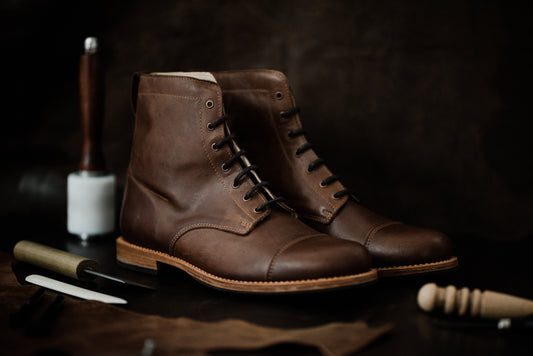
Boots designed to be repaired instead of replaced:
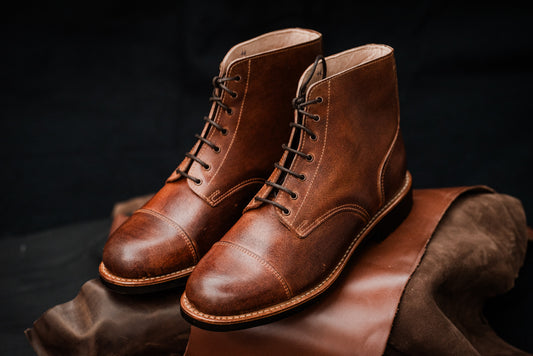
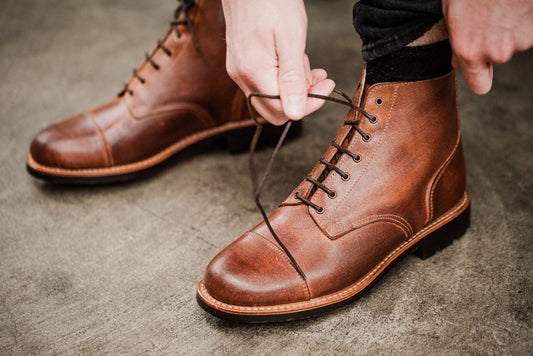
OldMulla boots use stitched construction that allows resoling and long-term ownership.
Leather Quality and Hidden Costs
Not all leather behaves the same over time. Lower-grade leathers are often heavily treated to look good initially, but they dry out, crack, or lose structure with wear.
Full-grain leather, by contrast, improves with use. It develops patina, adapts to your foot, and resists failure far longer.
Cheap boots rarely use it — because it would raise the price beyond what the model allows.
When Paying More Actually Means Spending Less
A higher upfront price often signals a different design philosophy:
- Boots intended for years, not seasons
- Construction that allows maintenance
- Materials chosen for ageing, not appearance
Over five to ten years, this approach almost always costs less — financially and environmentally.
Leather boots built with cost-over-time in mind:
Designed to handle repeated wear without structural failure.
The Question Worth Asking Before You Buy
Instead of asking “How much are these boots?”, a better question is:
How many times will I have to buy them?
Cheap boots answer that question quickly. Well-built boots answer it slowly.
And that difference is where real value lives.