
One Boot, Many Lives: How the Same Pair Should Age Over Time
Aktie
One Boot, Many Lives: How the Same Pair Should Age Over Time
Most products are designed to look their best on day one. Quality boots are designed to look better on day one thousand.
Age is not a flaw in well-made footwear. It’s the point.
Month One: Structure and Adaptation
When boots are new, they still belong to the maker.
The leather is firm. The shape is defined. The sole hasn’t learned your stride yet.
This stage is about adaptation. The leather responds to heat and movement, slowly adjusting to your foot.
Nothing dramatic should happen — just small changes that signal the beginning of ownership.
Six Months: Comfort Becomes Personal
After regular use, something shifts.
Pressure points soften. Flex points align with how you walk. The boots begin to feel familiar rather than new.
At this stage, comfort is no longer generic. It’s personal.
Two Years: Patina, Not Wear
This is where quality becomes visible.
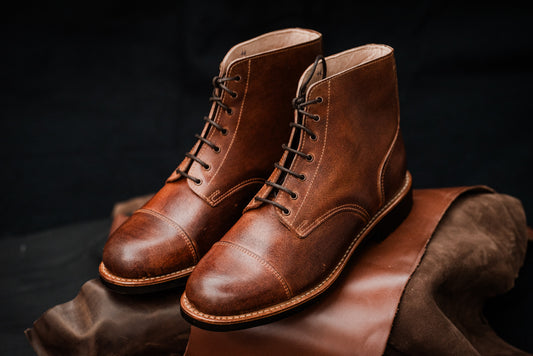
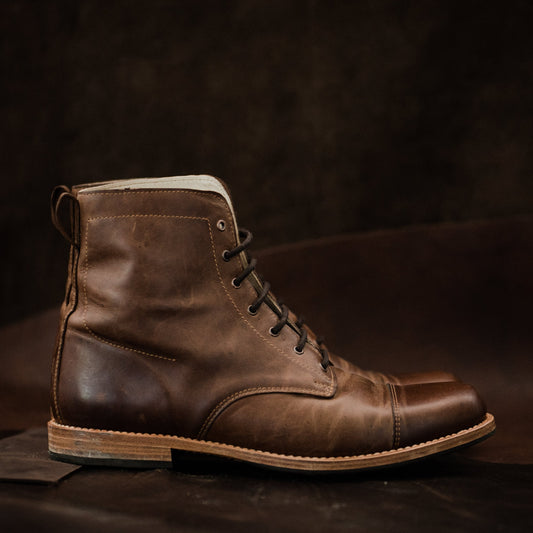
The leather darkens slightly. Creases deepen in natural lines. The surface develops character.
This is patina — not damage. A record of use, not neglect.
Cheap leather tries to hide age. Quality leather reveals it honestly.
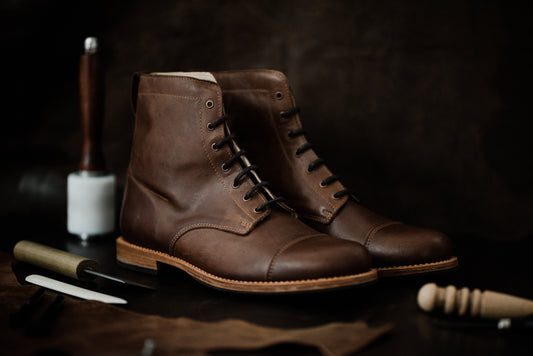
Leather boots designed to age with character:
Built with materials that improve visually and structurally over time.
Three to Five Years: Maintenance, Not Replacement
By now, the sole has done its job. This is expected.
In disposable footwear, this would be the end. In well-constructed boots, it’s a checkpoint.
Resoling restores function while preserving the upper — the part that has become uniquely yours.
This is where long-term value becomes tangible.
Five to Ten Years: Familiarity Over Novelty
At this stage, boots stop being evaluated. They simply exist as part of your routine.
They don’t surprise you. They don’t need breaking in. They just work.
The leather reflects years of use. The fit feels natural. The boots carry history.
What Should Never Happen
Even over many years, certain things should not occur:
- Structural collapse
- Leather cracking or splitting
- Permanent discomfort
- Irreparable sole failure
These are not signs of age. They are signs of poor design.
Why This Changes How You Buy
When you understand how boots should age, your buying criteria shifts.
You stop asking how they look today and start asking how they’ll look in five years.
That single change eliminates most bad purchases.
Boots built for years of real use:
Designed to evolve, adapt and remain relevant over time.
The Honest Conclusion
Good boots don’t stay new. They stay useful.
They collect marks, memories and comfort — not reasons to be replaced.
One well-made pair doesn’t live one life. It lives many.