
How Long Should Quality Leather Boots Really Last
How Long Should Quality Leather Boots Really Last
One of the most common questions men ask before investing in leather boots is simple: how long should they actually last. The honest answer is not measured in months or seasons, but in years of real use.
This article explains what longevity truly means in footwear, what factors shorten or extend a boot’s life, and why most expectations are shaped by marketing rather than reality.
The Myth of the “Lifetime Boot”
No leather boot lasts forever. Claims of “lifetime durability” usually ignore wear patterns, usage intensity, and basic material limits.
Quality boots are designed to be worn hard, rested properly, and repaired when necessary. Longevity comes from a system, not a slogan.
What Actually Determines How Long Leather Boots Last
- Leather quality and thickness
- Boot construction and repairability
- Frequency of wear and rotation
- Walking surfaces and climate
- Basic care, not obsessive maintenance
Two identical boots can age very differently depending on how they are used.
Leather Quality Matters More Than You Think
Full-grain or high-quality vegetable-tanned leather ages by developing patina. Lower-grade leather hides damage through coatings, until it fails suddenly.
Cracking, peeling, and loss of structure are signs of poor leather, not heavy use.

Construction and Resoleability
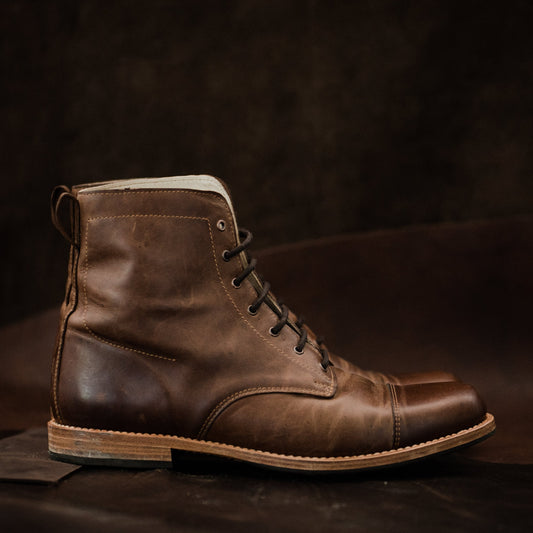
A boot that cannot be resoled is disposable by design. Repairable constructions allow the upper to outlive multiple soles.
When resoling is done correctly, the lifespan of quality boots increases dramatically, often extending beyond ten years of regular use.
How Long Boots Should Last in Real Terms
For quality leather boots worn in rotation:
- 3 to 5 years with heavy daily use
- 7 to 10 years with regular rotation
- 10+ years when resoled and maintained sensibly
These are not exceptional cases. They are realistic outcomes when boots are built and used properly.

Rotation Is Not Optional
Wearing the same pair every day shortens its lifespan significantly. Leather needs time to dry and recover its structure.
Even rotating between two pairs can double the usable life of both.
Care That Helps vs Care That Hurts
Excessive conditioning weakens leather fibres. Minimal, consistent care works better than constant intervention.
- Let boots dry naturally
- Brush regularly
- Condition sparingly
Care should support the leather, not suffocate it.
When Boots Are “Worn Out” vs “Worn In”
Scratches, creases, and colour changes are signs of use, not failure. Structural collapse, cracked leather, and separated soles indicate the end of service life.
Understanding this distinction prevents premature replacement.

Conclusion
Quality leather boots are not disposable items. They are long-term tools.
When chosen carefully, worn realistically, and repaired when needed, a good pair of boots should last years, not seasons.
Longevity is not about perfection. It is about durability that keeps up with real life.