
Are Expensive Boots Worth It? A Cost Per Wear Perspective
Are Expensive Boots Worth It? A Cost Per Wear Perspective
Many men hesitate before buying quality leather boots because of price. The assumption is simple: expensive boots cost more, therefore they are a luxury. This logic ignores a crucial factor in long-term value, cost per wear.
This article breaks down what cost per wear actually means and why higher-quality boots often cost less over time.
What Does Cost Per Wear Really Mean
Cost per wear is calculated by dividing the purchase price of a product by the number of times it is worn. It shifts focus from upfront cost to long-term use.
A boot worn regularly over several years often becomes cheaper per wear than a lower-priced alternative replaced frequently.
A Simple Cost Per Wear Comparison
Let’s compare two realistic scenarios.
- Boot A: 150€, worn 600 times over several years = 0.25€ per wear
- Boot B: 80€, worn 120 times before replacement = 0.66€ per wear
Although Boot A costs more initially, it delivers significantly better value over time.
Why Cheaper Boots Often Cost More Long-Term
Lower-priced boots are typically designed around cost reduction. This affects leather quality, construction, and repairability.
- Lower-grade leather breaks down faster
- Soles are glued rather than stitched
- Repair is impossible or uneconomical
Once the sole fails, the boot is discarded and replaced, restarting the cost cycle.
How Repairability Changes the Equation
Repairable construction dramatically extends the lifespan of boots. Resoling costs a fraction of replacing the entire pair.
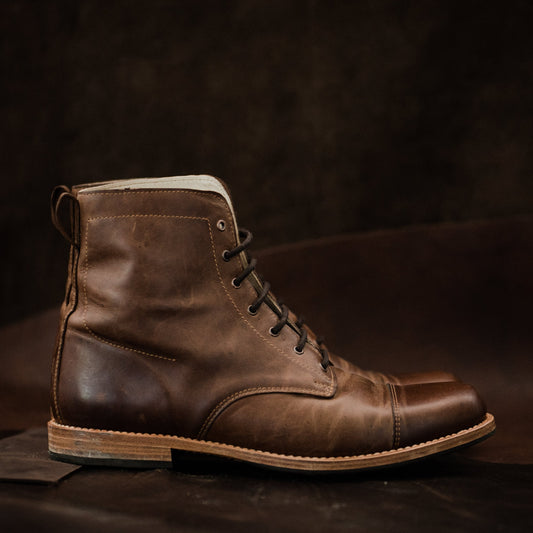
Boots built with methods such as Blake Rapid allow the outsole to be replaced while preserving the upper, which is the most valuable part of the boot.

Frequency of Use Matters More Than Price
Cost per wear only works if the boots are actually worn. Comfort, fit, and versatility determine frequency of use.
Boots that are uncomfortable or overly specialised stay in the wardrobe, increasing their real cost.
Why Timeless Design Improves Value
Trendy boots date quickly. Once they feel outdated, they are worn less or abandoned entirely.
Timeless designs maintain relevance year after year, increasing total wear count and lowering cost per wear naturally.

Cost Per Wear and Sustainability
Boots worn longer generate less waste. Longevity is the most practical form of sustainability.
Buying fewer, better-made boots reduces resource consumption more effectively than replacing cheaper pairs repeatedly.
Conclusion
Expensive boots are not automatically better, but well-made boots are often cheaper in the long run.
Cost per wear reframes footwear as a long-term decision rather than a short-term purchase.
If a pair of boots can be worn, repaired, and enjoyed for years, its value extends far beyond the price tag.